
You bought a bold, colorful art print. Maybe it was an impulse — something about the colors stopped your scroll and you hit "add to cart" before your practical brain could talk you out of it. Now it's arrived, you love it, and you're standing in your living room wondering: where does this thing actually go?
Styling colorful art is easier than most people think. The anxiety comes from a fear of "clashing," but that fear is almost always unfounded. Bold art doesn't need a bold room. In fact, it works best when the room around it stays relatively calm and lets the piece do the talking.
Here's how to make colorful art look intentional in every room of your home.
The Living Room: Make It the Anchor
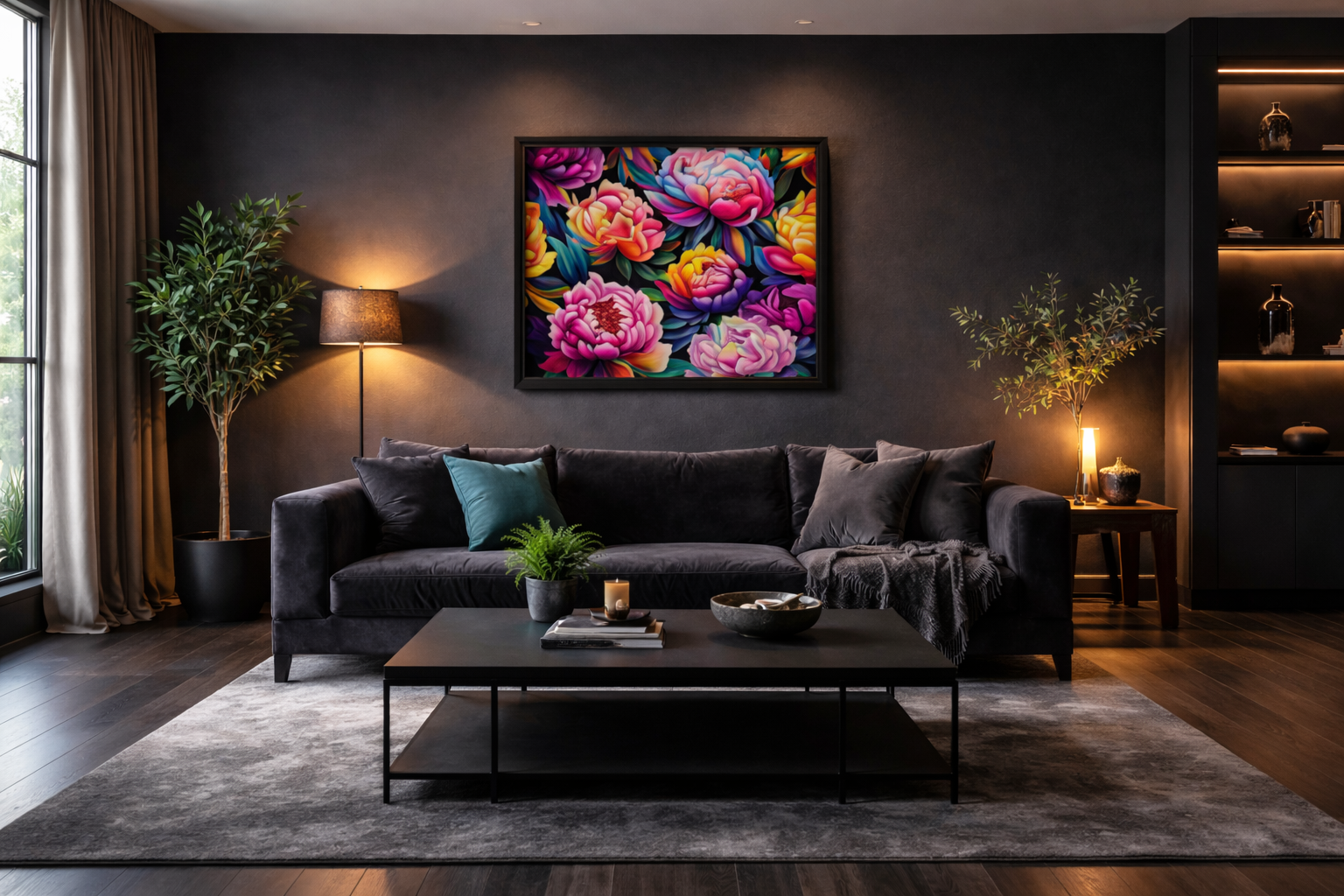
The living room is where most people hang their first statement piece, and for good reason. It's the room guests see first, the room you spend the most waking hours in, and the room with the most wall space to work with.
The classic placement is centered above the sofa. For this to work well, the art should be roughly two-thirds the width of the sofa — not wider, not dramatically narrower. This creates visual balance between the furniture and the wall. A common mistake is hanging a piece too small for the wall, which makes it look like an afterthought rather than a focal point.
Hang the center of the piece at eye level, which is roughly 57 to 60 inches from the floor. If it's above a sofa, leave about 6 to 8 inches between the top of the sofa back and the bottom edge of the frame. This closes the gap between furniture and art so they read as one composition rather than two separate elements.
For color integration, use the "echo" technique: pick one secondary color from the print and repeat it once or twice in the room. If the piece has a streak of teal running through it, a teal throw pillow or a small ceramic vase in a similar tone creates a subtle visual connection. You don't need to match everything — one echo is enough.
The Home Office: Energy Without Distraction
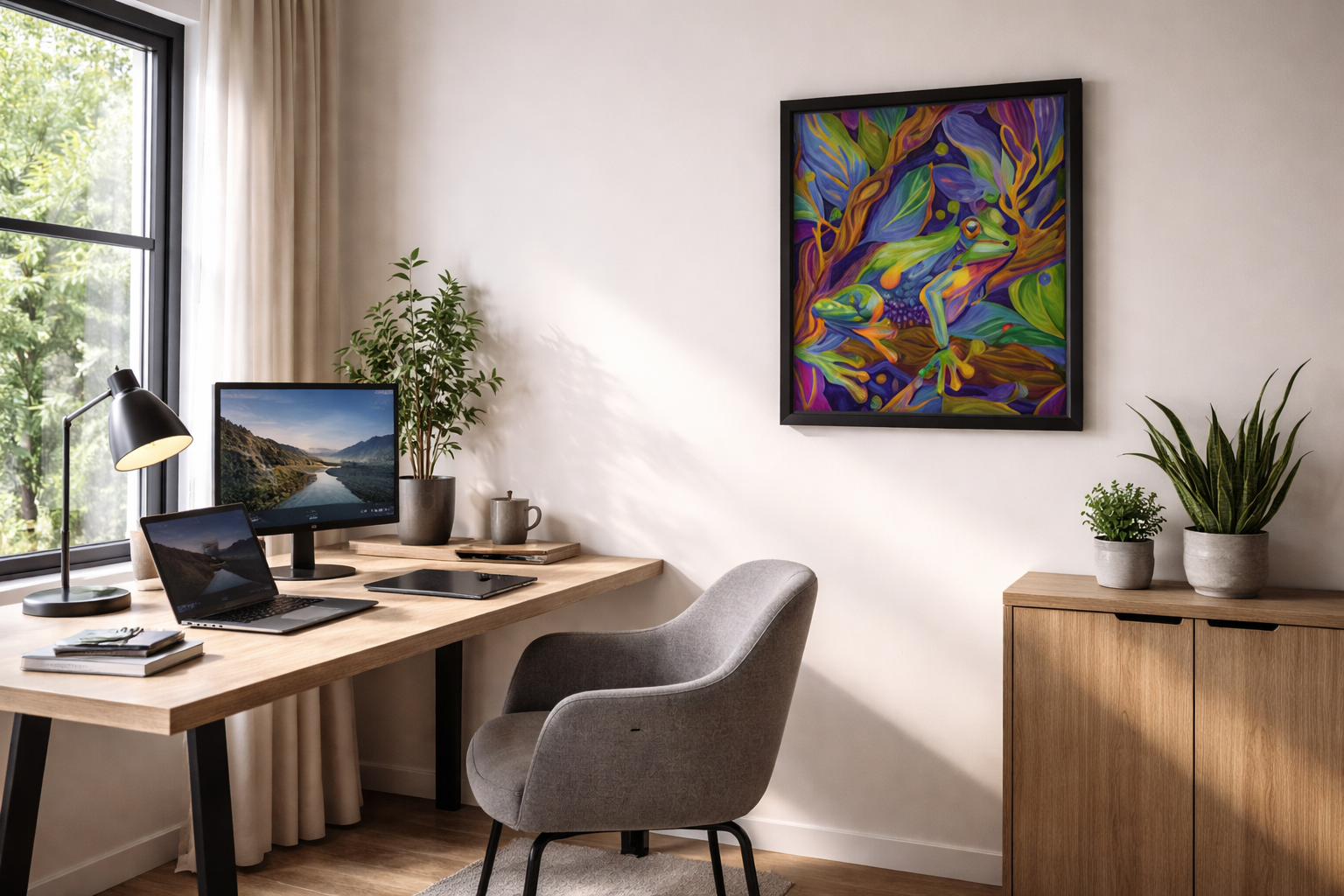
Remote workers have discovered that bare walls contribute to creative fatigue. Staring at nothing all day makes you feel like you're working inside nothing. A colorful art print behind or beside your desk changes the atmosphere without adding noise or distraction.
The key in a home office is placement relative to your sightline. Hanging art directly behind your monitor means you never see it while working — it only shows up on Zoom calls (which is a valid reason, honestly). Hanging it on a side wall or the wall you face when you look up from your desk gives you a visual reset point throughout the day.
Wildlife and nature subjects work particularly well in offices because they provide a subconscious connection to the natural world that's missing from screen-heavy environments. A vibrant animal portrait or botanical piece adds life to the room in a way that abstract art sometimes doesn't — there's an emotional warmth to recognizable subjects rendered in unexpected color.
The Bedroom: Bolder Than You Think
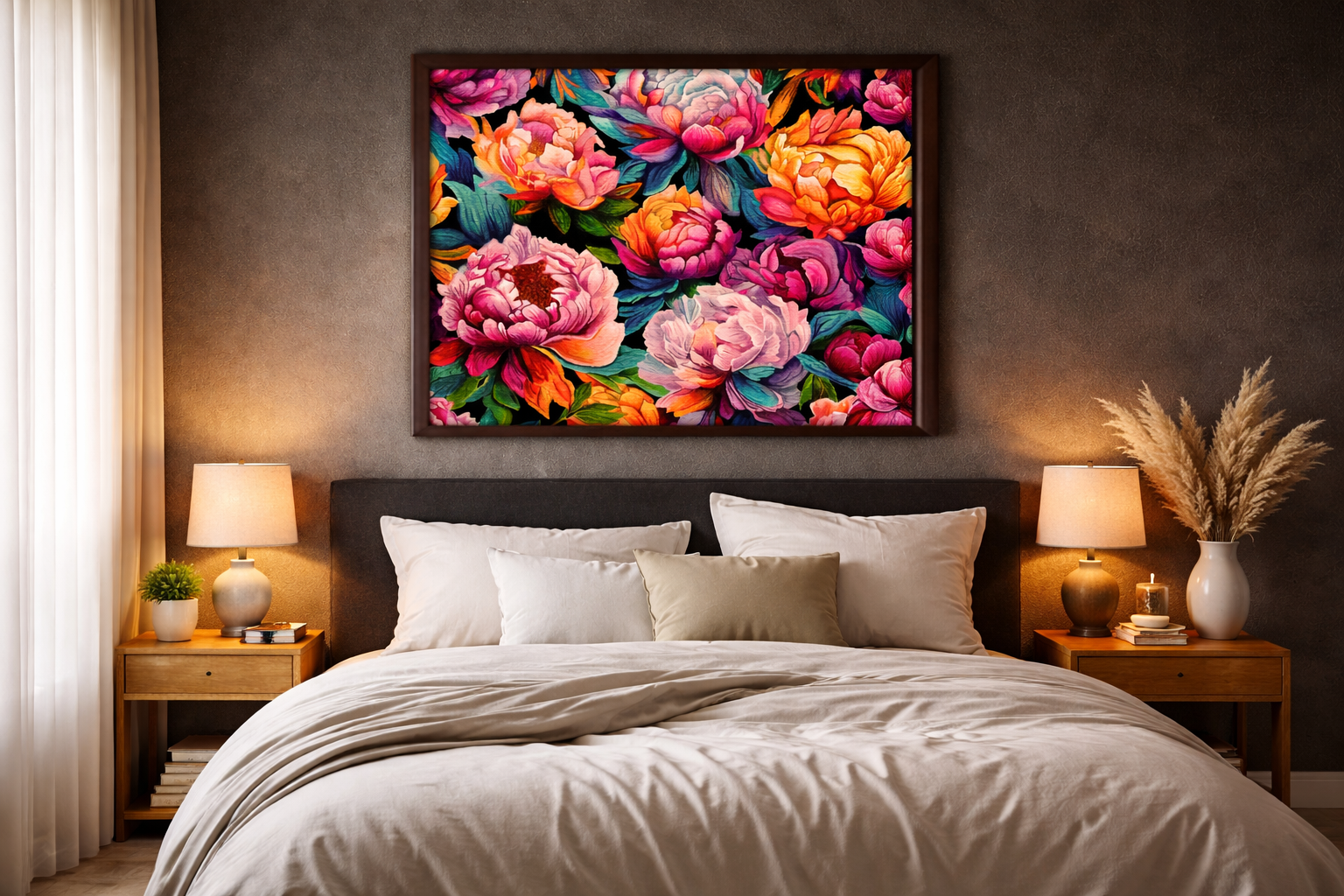
People default to calm, muted art in bedrooms because they associate the room with rest. But bold art doesn't prevent relaxation — boring art just fails to add anything at all.
The best placement in a bedroom is above the headboard. This is a large, visible wall that's often left bare or dressed with something too small. A single oversized print or a pair of matched pieces creates a finished look that makes the bed feel like the room's centerpiece.
If you're worried about colorful art feeling "too much" for a bedroom, consider pieces where the bold color is balanced by darker tones — deep jewel tones, rich purples, forest greens mixed into the palette alongside brighter hues. These pieces read as vibrant but not hyperactive. The warmth draws you in rather than amping you up.
Kids' Rooms: Skip the Cartoon Characters
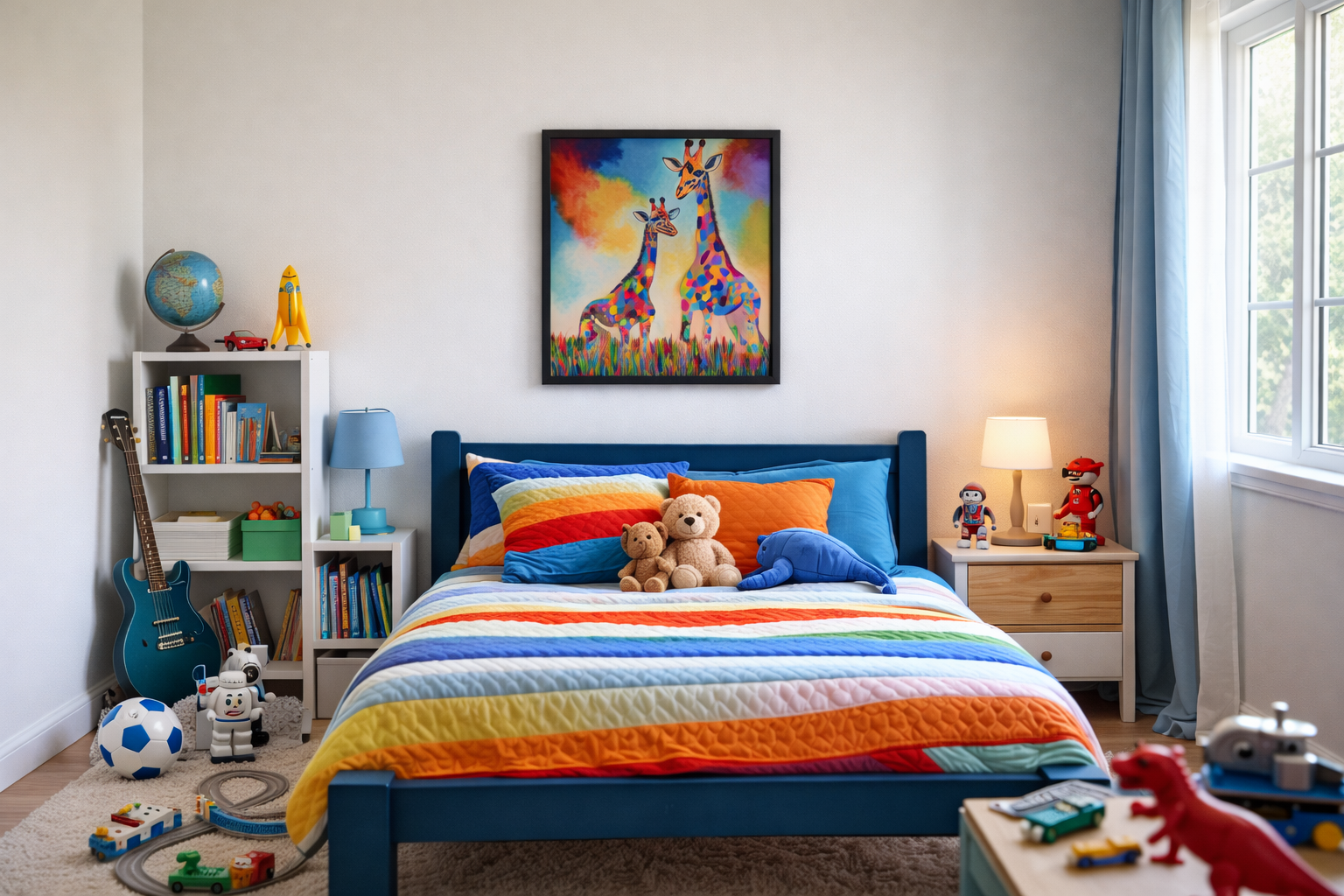
Here's an under-appreciated truth about decorating kids' rooms: children respond to real art just as strongly as they respond to licensed character prints — often more so. A vibrant animal piece with rich, saturated color captivates kids because they're naturally drawn to color and pattern. And unlike a cartoon character poster, it doesn't have an expiration date.
A technicolor giraffe or a rainbow frog works for a toddler's nursery and still looks great when they're twelve. The piece grows with the child because it's art, not merchandise. This saves you from the cycle of redecorating every time their favorite show changes.
For kids' rooms, consider pieces on canvas or framed behind glass for durability. Prints with animal subjects are particularly engaging for younger children, while older kids tend to gravitate toward pieces with more abstract color work or fantastical subjects like dragons.
Hallways and Entryways: The First Impression
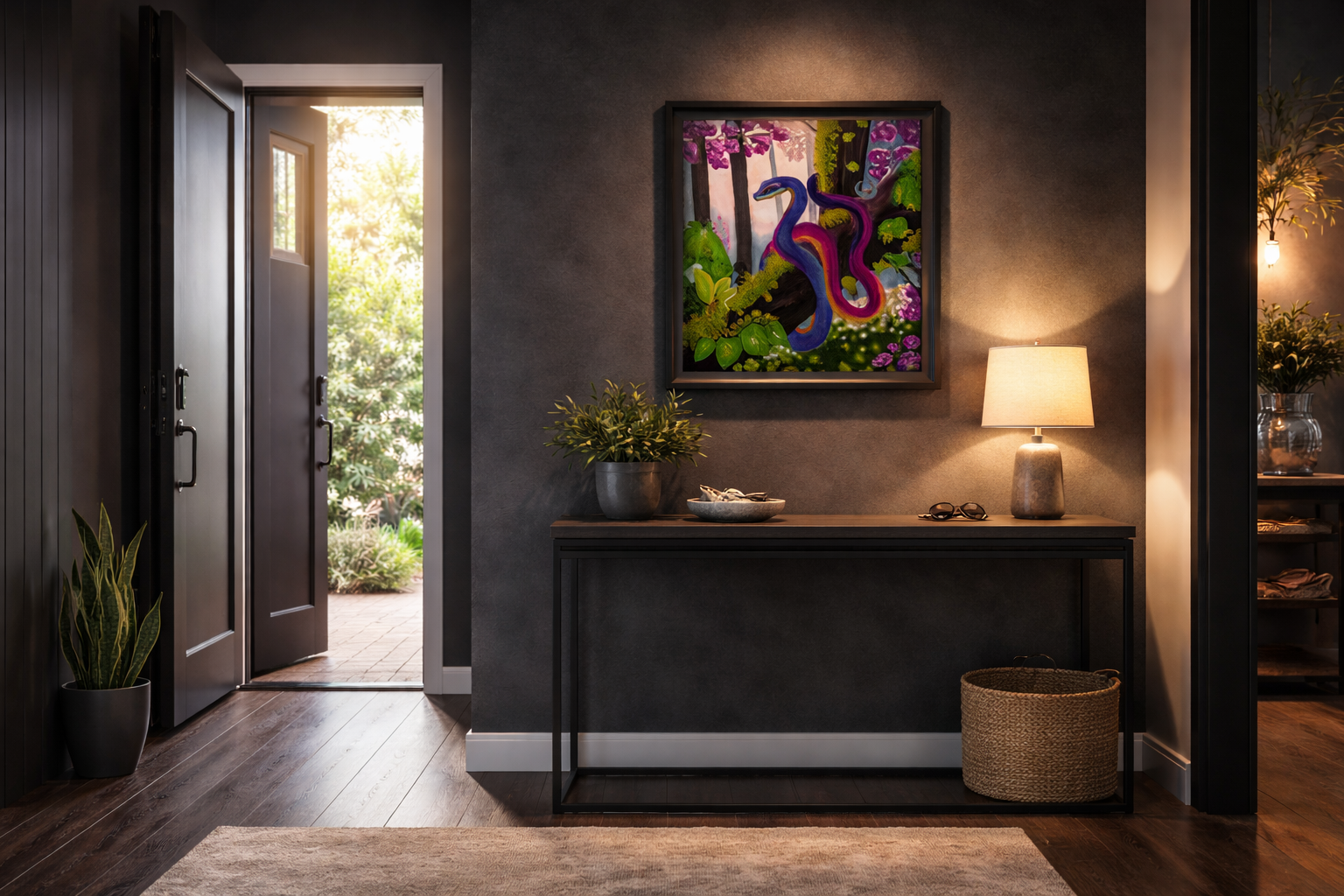
Hallways and entryways are prime real estate for colorful art because they set the tone for the entire home. A bold piece in the entryway signals personality and confidence before anyone sees the rest of the house. It's a handshake — it tells visitors what kind of space they're walking into.
In narrow hallways, choose vertically oriented pieces that draw the eye upward rather than wide horizontal pieces that emphasize the tight space. Gallery walls — a curated collection of smaller pieces in a deliberate arrangement — can work beautifully in longer hallways, turning a pass-through space into a destination.
For entryways, a single high-impact piece on the wall opposite the front door creates an immediate focal point. When someone walks in, their eye goes straight to the art. It's the most efficient way to establish your home's aesthetic identity.
The Bathroom: Seriously, Don't Skip It
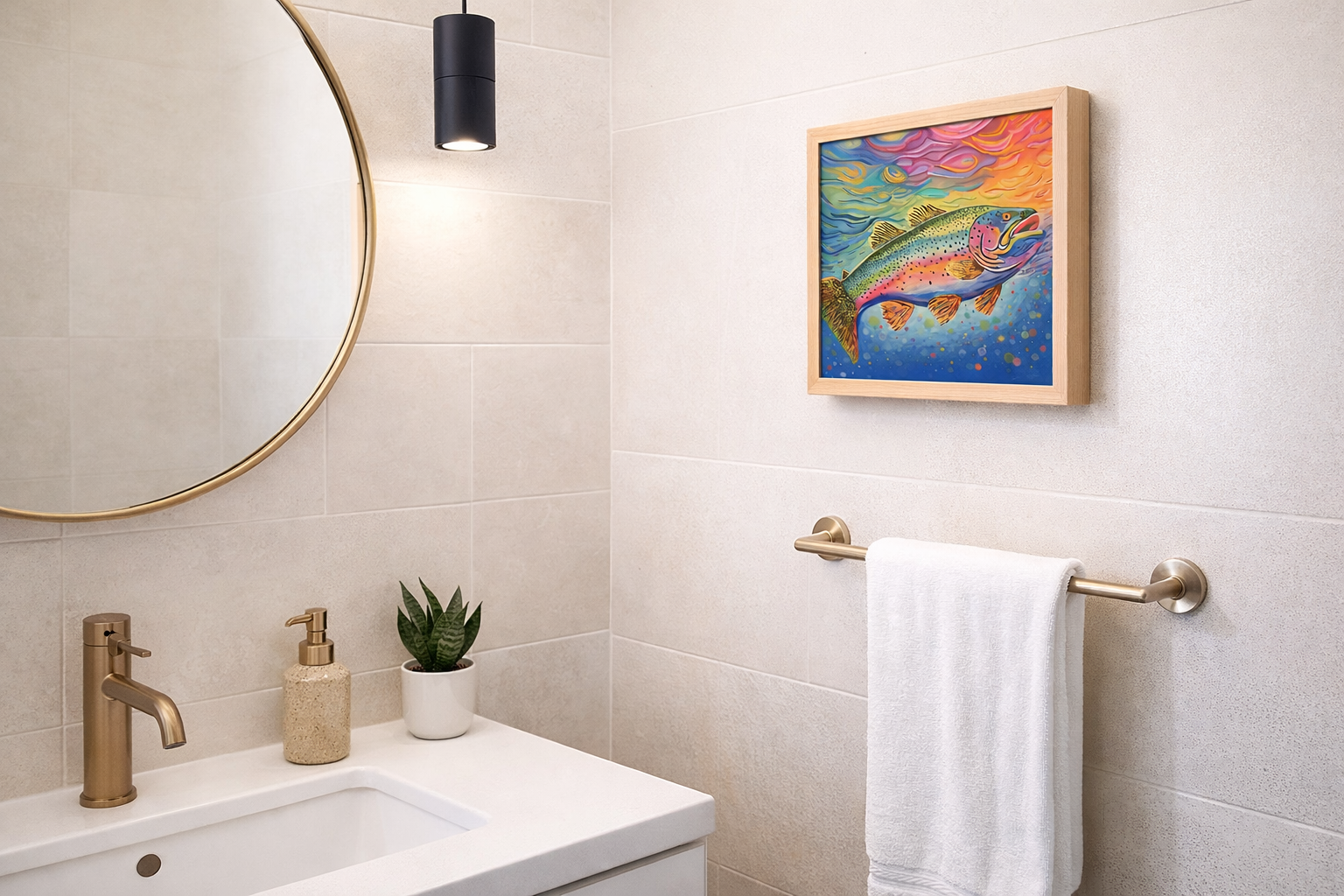
Bathrooms are the most overlooked room for art, which is exactly why hanging a vibrant piece there feels so surprising and intentional. A small framed print — 10×10 or 12×12 — on the wall across from the mirror or above the towel rack transforms a utilitarian space into something that feels considered.
The main concern people have is humidity. If your bathroom gets very steamy, choose a framed print with glass rather than an unframed paper print or canvas. The glass protects the piece from moisture. In half-baths and powder rooms where humidity isn't an issue, anything goes.
One Rule That Overrides Everything Else
Hang art you love. Not art you think you should love. Not art that "goes with" your furniture. Not art that looks like what you saw in a design magazine.
The pieces that transform a home are the ones that make you feel something every time you see them. If a technicolor tree frog makes you smile at 7 AM while you're still half asleep, that's the piece. If a rainbow safari scene makes you pause mid-scroll and take a breath, that's telling you something.
Trust that instinct. Your walls will thank you.
Danielle Cowdrey is a Houston-based artist whose technicolor wildlife and nature prints have been featured at exhibitions on two continents. Every piece is original artwork, gallery-quality printed and made-to-order. See how they're made or browse the full collection.


